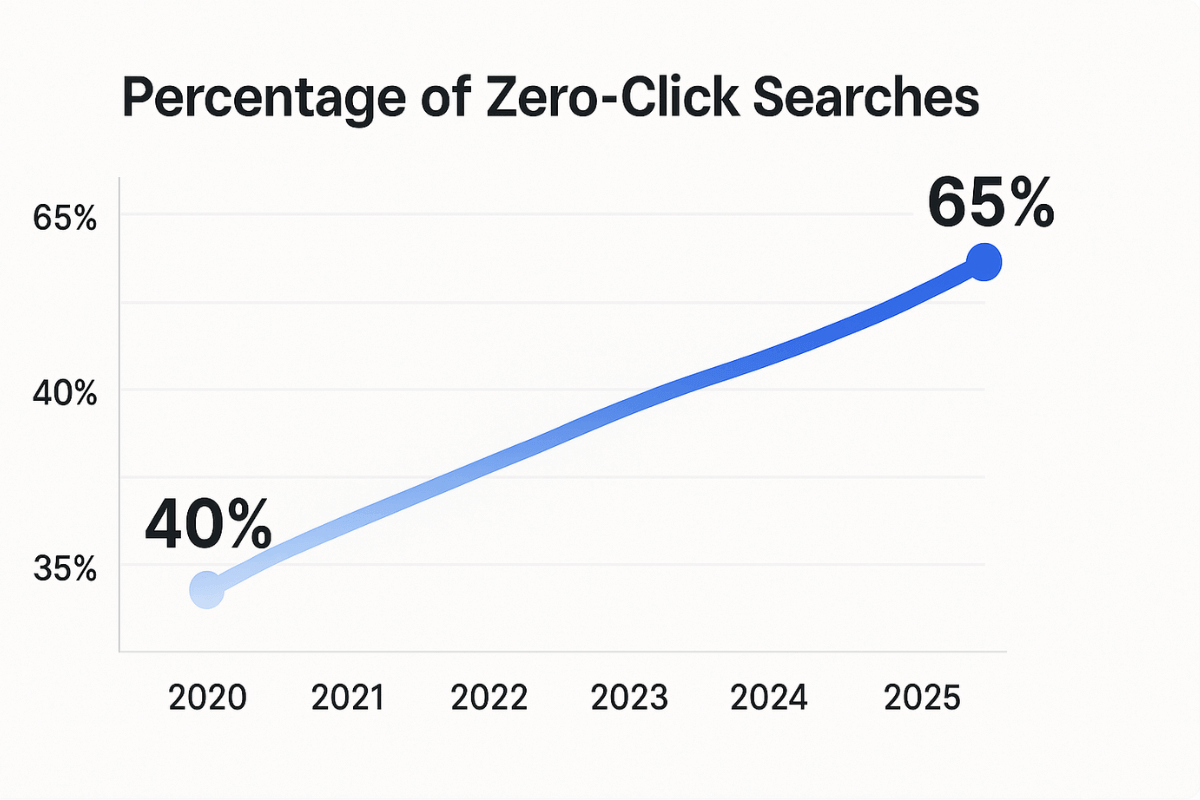
65% of Google searches now end without a click. Despite this zero-click reality, brands cited in AI Overviews are seeing a significant boost—an average of 35% more organic clicks and a 91% higher paid click-through rate compared to competitors who aren't mentioned.
If you're a CMO or SEO director watching traffic decline while budgets face scrutiny, you're experiencing a seismic shift in the market. This change moves the focus from traffic-based SEO to citation-based brand visibility SEO.
🔑 Key Insight
Being ranked highly isn't enough anymore. Being cited as the authoritative source is what truly drives revenue influence in the modern digital landscape.
What You'll Learn
This article provides your roadmap to navigating the AI Citation Economy:
- Why traffic no longer reliably predicts ROI
- How the citation premium works and drives measurable business outcomes
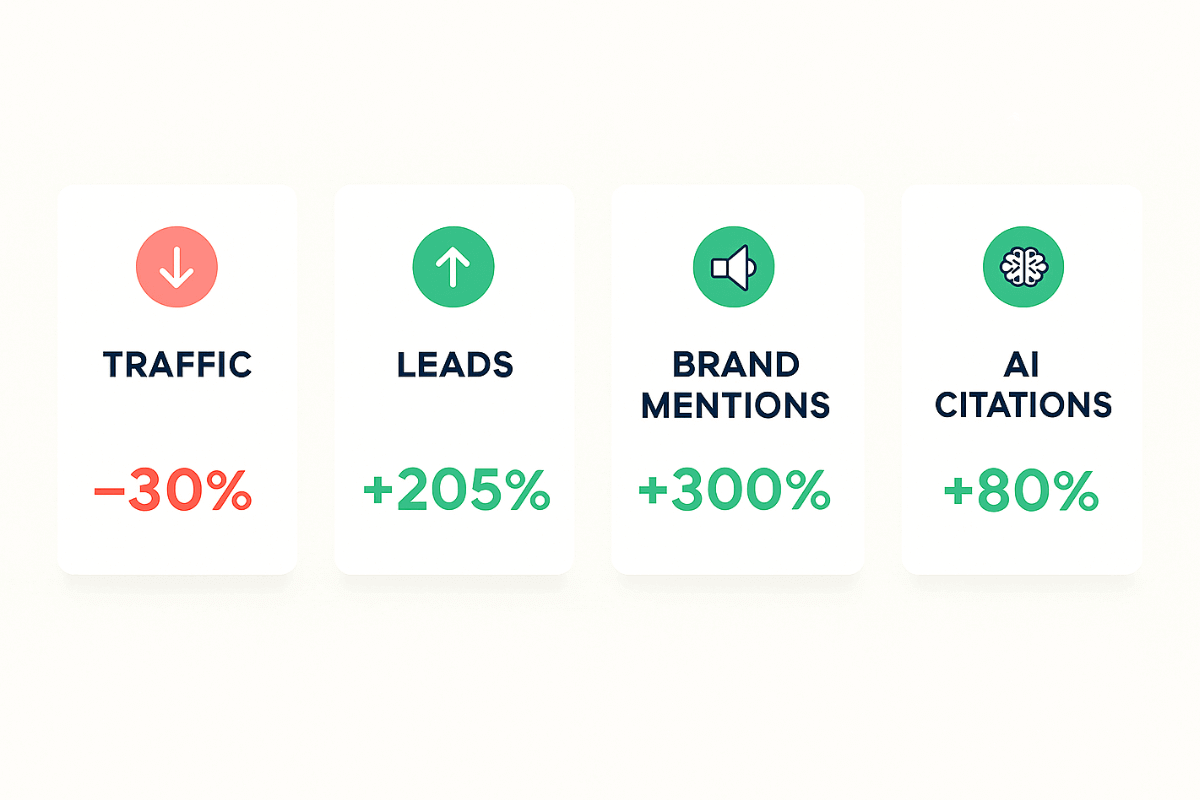
- A real case where qualified leads tripled despite a 30% drop in traffic
- An actionable 90-day roadmap to reposition your brand for visibility gains
The Zero-Click Reality & Why Traffic No Longer Predicts ROI
The core economics of search have fundamentally changed. Zero-click searches now account for 65% of all Google queries, which means the majority of search demand no longer generates a traditional website visit.
AI Overviews compress complex answers directly into the search results page, significantly reducing the user's need to leave Google. For many years, SEO success was primarily measured by metrics like traffic volume and keyword rankings.
The Dangerous Blind Spot
When users get comprehensive answers without clicking, organic traffic naturally drops even as the underlying market demand remains steady—or even grows. Relying solely on traditional metrics creates a dangerous blind spot that can incorrectly make it seem like user interest is declining when, in fact, user intent is simply being satisfied in a new, more efficient way.
The implications for brand visibility SEO are significant:
- Brands cited in AI Overviews maintain both visibility and authority even as clickthrough rates compress across the board
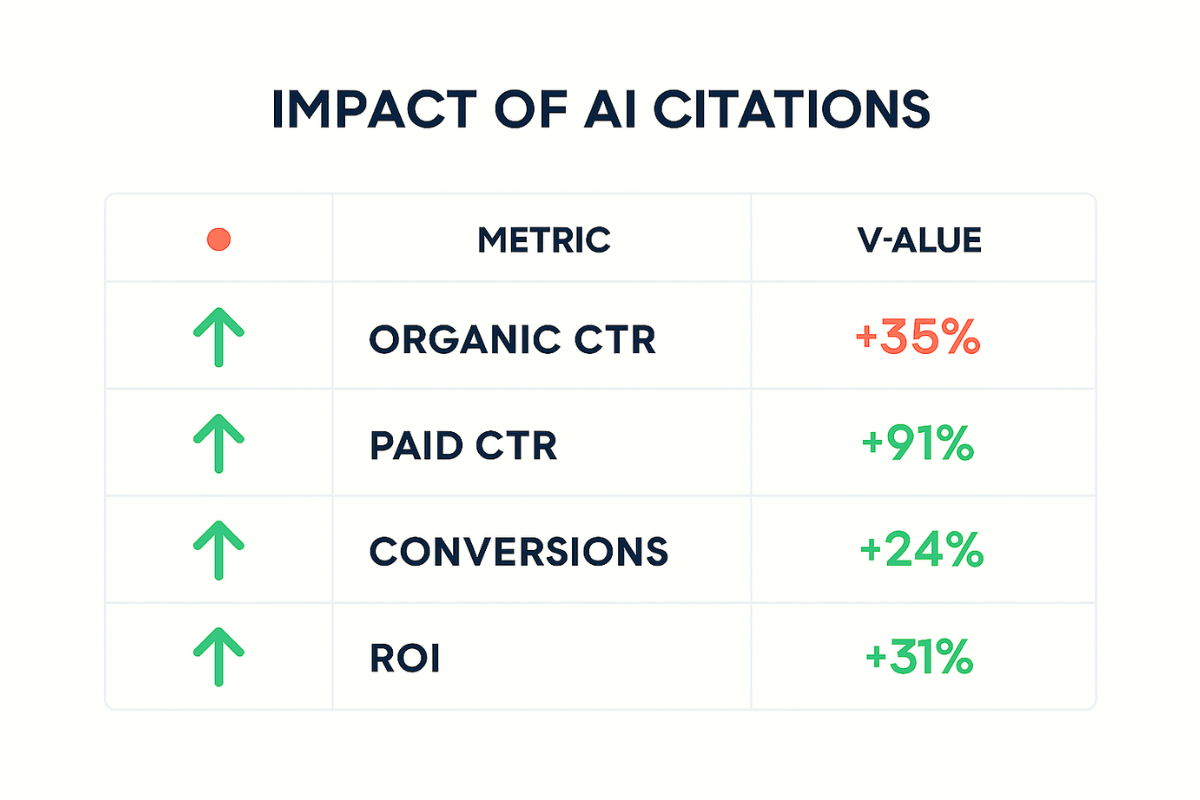
- Data from a September 2025 study confirms: brands mentioned in AI-generated answers receive 35% more organic clicks on average
- These cited brands experience a 91% lift in paid click performance versus non-cited competitors
- Brands absent from these crucial citations see their organic click-through rate for informational queries plummet from 1.41% to 0.64%
💡 Reality Check
Imagine your traffic dropping by 30%, yet your leads tripling—this isn't hypothetical. It's the emerging reality for brands that successfully embrace a brand visibility SEO approach.
The New Competitive Dynamic
You are no longer primarily competing for a top ranking; you are competing to become the source that AI systems implicitly trust. Traffic is no longer the main indicator of demand capture; citation frequency is the critical metric.
Inside the AI Citation Economy: How Visibility Now Works
AI Overviews do more than just summarize existing content—they actively curate which brands deserve an explicit mention as authoritative sources. This process creates a new kind of ranking system where entity authority matters far more than traditional keyword optimization.
When powerful AI systems like Google Gemini or ChatGPT reference your brand, they are essentially endorsing you as a trusted source to millions of users globally.
The Trust Mechanism
Being consistently recognized as "the source" successfully builds brand trust even without a direct click, thereby driving brand recall and positively influencing future purchase decisions.
This mechanism defines the AI Citation Economy: visibility and authority are now earned through strategic, high-value mentions in AI-generated content.
Citation velocity and citation consistency have quickly become the most critical KPIs for modern marketing:
- How frequently is your brand mentioned by AI?
- How consistently does AI reference you across different query types?
These citation metrics now predict your market influence much better than traffic volume ever did.
The Data Behind the Shift
Recent research clearly confirms this measurable shift:
| Metric | Impact |
|---|---|
| Organic Traffic Lift | +35% for cited brands |
| Paid CTR Improvement | +91% for cited brands |
| Reddit Citation Growth | +450% in 3 months |
| UGC Citation Share | 21.74% of all AI citations |
User-generated platforms like Reddit have seen a remarkable 450% surge in citations in just three months, now comprising 21.74% of all AI citations according to Semrush 2025 research.
❓ Critical Question
Is your brand consistently trusted by AI, or is it mostly ignored?
What AI Evaluates
AI is not a traditional search engine; it operates as a knowledge synthesizer that strategically prioritizes entities with strong, consistent authority signals:
- Content depth and originality
- Consistent citations across sources
- Third-party references and validation
- User engagement metrics
- Semantic relevance to queries
Your sophisticated brand visibility SEO strategy must now optimize for citability, not just mere discoverability.
Brand SEO vs Traffic SEO: The New Competitive Divide
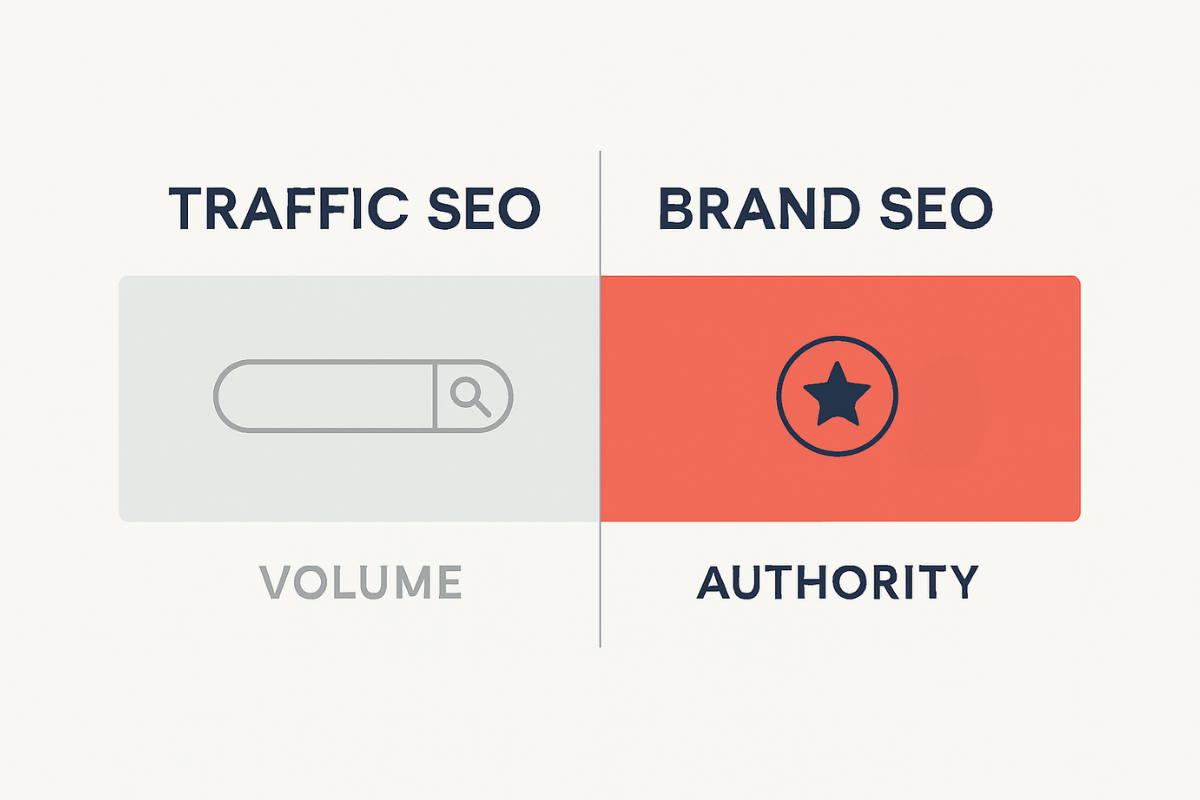
Two fundamentally different strategies now define modern competitive digital positioning: Traffic SEO versus Brand SEO. Knowing which side your brand is operating on determines whether you successfully build durable, compounding authority or continue to chase rapidly diminishing returns.
The Strategic Matrix
| Feature | Traffic SEO | Brand SEO |
|---|---|---|
| Primary Focus | Keywords, search volume, click optimization | Entity authority, citation frequency, trusted source |
| Strategy Type | Reactive, competing for algorithm-driven ranking spots | Proactive, building authority independent of algorithms |
| Success Metric | Website visits and traffic volume | Mentions, citations, and trust signals from AI |
| Time Horizon | Short-term, campaign-based | Long-term, compounding returns |
| Competitive Moat | Easily replicated by competitors | Difficult to replicate authority signals |
Traffic SEO: The Old Playbook
Traffic SEO focuses narrowly on short-term keyword rankings, search volume, and click optimization. This approach is inherently reactive, leading brands to compete for the same ranking spots as everyone else.
Success is precariously measured in site visits, which increasingly depend on the ever-changing algorithm whims of the search engine.
Brand SEO: The Authority Framework
Brand SEO, in contrast, prioritizes entity authority, citation frequency, and the strategic goal of becoming the reliably referenced source. This is a proactive approach, building recognition that compounds over time, often independent of major algorithm changes.
Success in this model is measured in valuable mentions, consistent citations, and strong trust signals that AI systems reward with prominence.
How AI Evaluates Brands
AI evaluates brands primarily at the entity level, not just the keyword level. When a user query triggers an AI Overview, the system quickly checks which entities demonstrate authority across:
- Content depth and expertise
- Consistent citations from third parties
- User engagement patterns
- Semantic relevance to topics
Brands practicing effective brand visibility SEO position themselves as definitive thought leaders, not merely as keyword competitors.
They consistently:
- Publish original research
- Create proprietary frameworks
- Actively contribute to industry discussions
- Strategically earn citations from authoritative sources
This process effectively builds a competitive moat that purely traffic-focused competitors cannot easily cross.
The Performance Reality
Analysis of citation-first brands shows clear, measurable trends:
- Traffic may indeed decline
- Quality of leads significantly rises
- Conversions demonstrably improve
- Authority-driven trust drives quantifiable results
🎯 Self-Assessment
Which side of this matrix is your brand operating in? If you are still optimizing solely for traffic volume, you are fighting yesterday's battle while your competitors strategically build tomorrow's authority.
The Business Case: Quantifying the Citation Premium ROI
The Citation Premium is the measurable revenue advantage that cited brands gain over their non-cited competitors. This is not a soft, abstract metric; it directly impacts pipeline value and reduces customer acquisition costs.
The CFO-Friendly Formula
Citation Frequency × Brand Trust Multiplier × Conversion Influence = Citation Premium Value
Cited brands demonstrably see a 35% higher organic visibility and a 91% higher paid performance, which directly reduces acquisition costs and drastically improves campaign efficiency.
Real Numbers, Real Impact
Consider this example: a paid search campaign currently converting at 3% could jump to 5.7% with the added influence of citation prominence—this 91% lift nearly halves the acquisition costs while keeping the ad spend constant.
For a B2B brand spending $50K/month on search advertising, this translates to an impressive $300K in annual efficiency gains.
The Compounding Asset
Unlike volatile traffic, citations are an asset that compounds over time. Each high-quality mention strengthens your entity signals, making future citations more likely—creating a virtuous flywheel effect that generates accelerating returns.
User-generated content adds powerful leverage to this process. The dramatic 450% surge in Reddit citations over three months shows that authentic community authority signals significantly influence AI systems.
Brands that actively and meaningfully participate in forums and discussions gain extra, high-value citation opportunities beyond their owned channels.
Budget Planning Reality
If your citations were to grow by 20% next quarter, how much pipeline value could that specifically add? For most B2B brands, the proven ROI overwhelmingly justifies shifting critical resources from obsolete traffic-focused tactics to modern authority-building initiatives.
💼 Strategic Insight
This metric now fundamentally defines Q4–Q1 budgeting in the post-SEO era.
Case Study: Tripling Leads With 30% Less Traffic
A mid-market B2B software company recently faced a familiar challenge: steadily declining organic traffic despite consistently holding top-10 keyword rankings. Traditional metrics incorrectly suggested the brand was losing ground and put pressure on their SEO investment.
Starting Point: The Traffic Trap
The company's strategy was focused narrowly on traffic volume, producing generic keyword-targeted content that achieved high rankings but critically lacked essential brand authority signals.
Organic sessions were down 30% year-over-year, leading to significant pressure on the marketing department.
Strategic Pivot: Authority First
The company deliberately shifted its focus to building strong brand visibility signals:
- Published original, proprietary research
- Developed unique intellectual property in the form of frameworks
- Strategically contributed thought leadership to high-authority industry platforms
- Moved from simply answering generic queries to actively shaping important industry conversations
Results Over 90 Days
| Metric | Change |
|---|---|
| Traffic | -30% (confirmed downward trend) |
| Qualified Leads | +205% (tripled) |
| Brand Mentions | +300% across authoritative publications |
| AI Citations | +80% increase |
The Mechanism Behind Success
The shift to higher-authority content attracted fewer overall visitors but a much higher number of far more qualified prospects.
The consistent AI Overview citations pre-qualified the prospects, who arrived at the website with existing brand awareness and a foundational level of trust.
Conversion rates substantially increased because the visitors already perceived the brand as a recognized authority in the space.
✅ Proof Point
Your traffic can shrink while your pipeline substantially grows. The key is the critical shift from being a keyword competitor to becoming a cited authority.
This case clearly demonstrates the citation premium in action: crucial business outcomes improve even as traditional, outdated metrics decline.
Your 90-Day Brand Visibility Roadmap (Actionable)
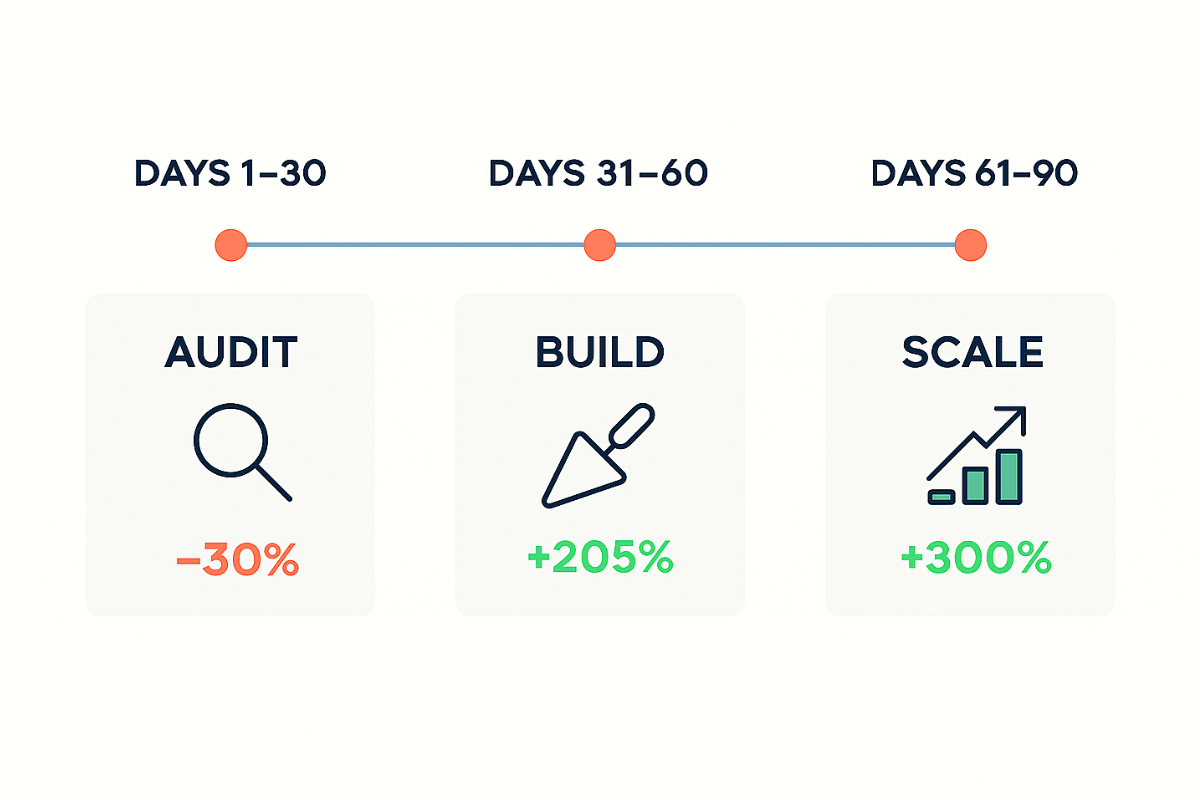
Successfully transitioning from conventional traffic SEO to brand visibility SEO requires structured execution across three distinct phases.
Days 1–30: Audit & Baseline
Conduct a Comprehensive Citation Audit
- Use tools like Semrush, Ahrefs, and manual checks of AI Overviews
- Document all competitor citations that your brand currently lacks
- Identify your citation gaps across key topics
- Calculate your current citation velocity
Map High-Authority Industry Sources
- Key publications in your vertical
- Influential podcasts and media outlets
- Professional communities and forums
- Relevant thought leaders and influencers
Establish Baseline Metrics
- Current citation frequency
- Competitor citation rates
- Existing traffic-to-lead conversion ratios
- Brand mention volume and sentiment
Days 31–60: Build Visibility & Authority Hubs
Optimize Cornerstone Content
- Structure content for snippet and answer eligibility
- Use crystal-clear definitions and concise explanations
- Include definitive data-backed claims
- Format for easy AI extraction
Publish Citation Magnets
- Original research with proprietary data
- Unique methodologies and frameworks
- Industry benchmarks and studies
- Expert analysis and predictions
Strategic Syndication
- LinkedIn articles and posts
- Industry newsletters
- Podcast appearances
- Guest contributions to authoritative sites
Develop Entity Optimization
- Ensure consistent NAP (Name, Address, Phone)
- Implement advanced Schema markup
- Build strategic internal linking structure
- Earn authoritative third-party signals
Days 61–90: Scale Influence & Measurement
Roll Out Thought Leadership
- Executive bylines in industry publications
- Speaking opportunities at conferences
- Podcast guest appearances
- Strategic contributions to industry groups
Proactive Citation Seeding
- Participate meaningfully in Reddit discussions
- Answer questions on Quora
- Contribute to professional forums
- Engage in LinkedIn comment threads
Implement Attribution Systems
- Multi-channel attribution tracking
- Citation influence on conversion paths
- AI Overview appearance monitoring
- Citation velocity trend analysis
Monitor Key Performance Indicators
- AI Overview appearances
- Citation velocity trends
- Direct correlations with pipeline and revenue
- Competitive citation gap analysis
🔍 Self-Assessment
Which of these steps is your team already doing effectively? Where are the clear gaps in your execution?
Most brands have some of these pieces in place but critically lack the systematic execution required for building consistent citation authority.
FAQ: Brand Visibility SEO
What is brand visibility SEO?
Brand visibility SEO is a modern marketing approach that focuses on establishing citation authority and entity recognition rather than chasing search traffic volume. The primary goal is to become the trusted source that AI systems reference, successfully earning mentions in AI Overviews and shaping purchasing decisions even without direct user clicks.
How do AI Overviews choose which brands to cite?
AI systems evaluate entity authority through several key factors: content depth and originality, the frequency of third-party citations, user engagement with the brand, semantic topic relationships, and overall consistency across the digital ecosystem. Sustained, high-quality authority is what earns preferential citation.
What is the citation premium, and why is it important?
The citation premium is the measurable performance boost that brands cited by AI enjoy. This includes an average of 35% higher organic clicks and a 91% higher paid click-through rate. This powerful advantage significantly reduces customer acquisition costs and improves the quality and intent of conversions.
Why is traffic no longer a reliable metric?
With 65% of all searches ending without a click, traffic volume no longer reliably reflects a brand's actual demand capture. AI citations allow brands to directly influence buying decisions and build trust without requiring users to visit the website, thereby making traffic an incomplete metric.
How do I measure citation velocity?
You can measure citation velocity by tracking AI Overview appearances using major SEO tools, monitoring new mentions across authoritative publications and professional communities, setting up alerts for all brand mentions, and benchmarking your frequency against key competitors. Citation velocity measures the rate at which new, authoritative mentions appear.
How do platforms like Reddit affect AI citations?
Citations from Reddit have surged by 450% in three months, now comprising 21.74% of all AI citations. AI systems highly value authentic community signals. Brands that participate meaningfully in these forums and discussions gain important, extra citation opportunities beyond their own controlled channels.
Conclusion: Your Advantage in the Post-SEO Era
Traffic remains volatile and is increasingly costly to acquire. In stark contrast, citations compound over time, successfully building an enduring authority that is resilient to continuous algorithm changes.
Early adopters of this modern brand visibility SEO strategy will gain durable, long-term advantages. The AI Citation Economy rewards genuine, verifiable expertise, not outdated keyword gaming tactics.
Your true competitive advantage now comes from:
- Creating content that is genuinely worth citing
- Providing insights that are worth referencing
- Establishing an authority that AI systems are programmed to recognize
This is the strategic moment to reposition your brand. While your competitors continue to chase declining traffic, you can build citation authority that successfully drives revenue influence across every stage of the customer journey.
Brands that dominate their respective categories five years from now are making this critical shift today.
❓ Final Question
Are you ready to calculate your brand's citation premium? The question isn't whether your brand needs to adapt—it's whether you will lead this necessary transition or be forced to scramble to catch up.
Ready to Build Your Citation Authority?
Calculate your brand's citation premium potential and identify your revenue opportunity.
Schedule Your Strategy Session → Download Free Report →